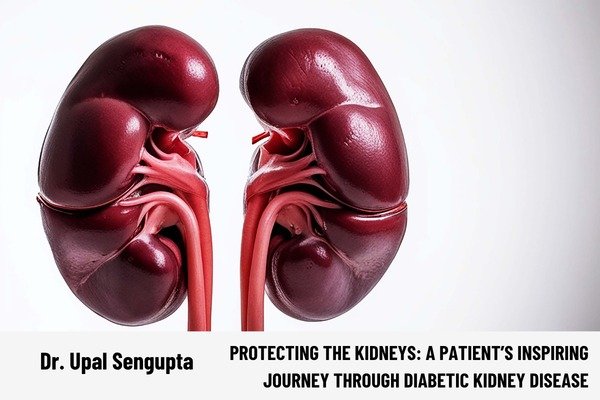
When Diabetes Began Affecting More Than Blood Sugar
At 56, Mr. Arindam Sen had been living with diabetes for several years.
For a long time, he felt that his diabetes was under control. He took his medicines when he remembered, occasionally checked his blood sugar, and tried to stay active.
Then he began noticing changes.
His feet started swelling toward the end of the day.
He felt unusually tired.
His blood pressure readings were frequently higher than before.
At first, Arindam assumed these problems were simply part of getting older.
But his family encouraged him to undergo a health check-up.
The results revealed that his kidney function had started to decline, and further evaluation suggested Diabetic Kidney Disease.
The diagnosis frightened him.
He had always associated diabetes with blood sugar—but he had never imagined that diabetes could gradually damage his kidneys.
Concerned about his future, Arindam consulted Dr. Upal Sengupta, Consultant Nephrologist, who explained his condition patiently and helped him understand that early medical intervention could play an important role in protecting remaining kidney function.
That consultation changed the way Arindam looked at his health.
Understanding Diabetic Kidney Disease
Dr. Sengupta explained that kidney damage related to diabetes can develop gradually, sometimes without obvious symptoms in the early stages.
What is Diabetic Kidney Disease?
Diabetic Kidney Disease (DKD) is a type of kidney damage that can occur as a complication of diabetes.
Over time, persistently elevated blood glucose levels can damage the small blood vessels and filtering structures within the kidneys.
High blood pressure can further contribute to kidney damage.
As the disease progresses, kidney function may decline.
The good news is that early detection and appropriate management can help slow the progression of kidney disease in many patients.
Why Diabetes Can Affect the Kidneys
The kidneys contain millions of tiny filtering units called nephrons.
These structures continuously filter the blood and help remove waste and excess fluid from the body.
Long-term diabetes can damage these delicate filtering structures.
One of the earliest warning signs can be albumin in the urine, even when a person feels completely well.
That is why regular kidney screening is particularly important for people living with diabetes.
Symptoms of Diabetic Kidney Disease
Early Diabetic Kidney Disease may have few or no noticeable symptoms.
As kidney function becomes more impaired, patients may experience:
- Swelling of the feet, ankles, or legs
- Persistent tiredness
- Changes in urination
- Increased or reduced urination
- Nausea
- Poor appetite
- Itching
- Shortness of breath due to fluid accumulation
- Difficulty concentrating
However, symptoms alone cannot reliably identify diabetic kidney damage.
Regular blood and urine testing is essential for early detection.
The Emotional Impact of a Kidney Diagnosis
For Arindam, learning that diabetes had affected his kidneys was emotionally difficult.
He worried about:
- Losing kidney function
- Needing dialysis
- Becoming dependent on his family
- Continuing his professional responsibilities
- The long-term effect on his health
Dr. Sengupta patiently addressed each concern.
He explained that Diabetic Kidney Disease does not automatically mean that a patient will need dialysis.
The focus was on identifying the stage of kidney disease, controlling risk factors, monitoring kidney function, and taking appropriate steps to slow further progression.
For Arindam, understanding his condition replaced fear with a sense of control.
Comprehensive Diabetic Kidney Disease Care with Dr. Upal Sengupta
As a Consultant Nephrologist, Dr. Upal Sengupta provides individualized evaluation and management for patients with diabetes-related kidney problems.
Depending on the patient’s condition, comprehensive care may include:
- Detailed nephrology consultation
- Kidney function assessment
- Urine albumin testing
- Blood pressure monitoring
- Blood glucose assessment
- Evaluation of cardiovascular risk
- Medication review
- Kidney-protective treatment strategies when appropriate
- Dietary and lifestyle guidance
- Monitoring of electrolytes
- Regular kidney function follow-up
- Assessment for complications of chronic kidney disease
The goal is not simply to treat a laboratory number but to protect kidney health while managing the patient’s overall well-being.
Arindam’s Personalized Treatment Journey
After a detailed evaluation, Dr. Sengupta developed a personalized management plan.
His Care Included:
- Comprehensive nephrology assessment
- Kidney function monitoring
- Urine albumin evaluation
- Blood pressure management
- Improved diabetes management in coordination with his treating physicians
- Review and optimization of prescribed medications
- Dietary guidance
- Lifestyle modification
- Regular monitoring of kidney function
- Scheduled nephrology follow-ups
Arindam also learned that small, consistent changes could make a meaningful difference.
He became more disciplined about his medicines.
He monitored his blood sugar regularly.
He paid closer attention to his blood pressure.
He followed the dietary recommendations provided by his healthcare team.
Most importantly, he stopped postponing his routine medical check-ups.
Why Early Detection Matters
One of the greatest challenges of Diabetic Kidney Disease is that it can progress silently.
A person may feel completely healthy while kidney damage is already developing.
Regular screening can help identify kidney problems earlier.
Monitoring may include:
- Serum creatinine
- Estimated glomerular filtration rate (eGFR)
- Urine albumin-to-creatinine ratio (UACR)
- Blood pressure
- Blood glucose and HbA1c
The exact tests and frequency of monitoring should be determined by the treating physician.
Early identification allows doctors to address diabetes, blood pressure, medications, and other risk factors before kidney disease becomes more advanced.
Can Diabetic Kidney Disease Be Prevented or Slowed?
Not every case can be completely prevented, but appropriate diabetes and kidney care can help reduce the risk of progression.
Important measures may include:
- Keeping blood glucose within the individualized target range
- Controlling blood pressure
- Taking prescribed medicines regularly
- Maintaining a healthy weight
- Following an appropriate diet
- Staying physically active when medically appropriate
- Avoiding smoking
- Attending regular kidney check-ups
- Avoiding unnecessary or potentially harmful medications without medical advice
The treatment plan should always be personalized according to the patient’s kidney function and other health conditions.
Recovery Journey: From Fear to Confidence
Arindam’s journey was not about a quick cure.
It was about learning how to protect his health every day.
Over time, he became more consistent with his treatment and follow-up appointments.
His blood pressure became better controlled.
His overall health improved.
Most importantly, he no longer felt helpless about his diagnosis.
He understood what his kidney reports meant and knew which warning signs required medical attention.
His family also became actively involved in supporting his healthier lifestyle.
For Arindam, the biggest change was not just in his medical reports—it was in his confidence.
Looking Toward a Healthier Future
Today, Arindam continues regular nephrology follow-up and remains committed to managing his diabetes and protecting his kidneys.
He has learned an important lesson:
Diabetes care is also kidney care.
His experience encourages other people living with diabetes not to wait for symptoms before checking their kidney health.
Under the expert supervision of Dr. Upal Sengupta, Consultant Nephrologist, personalized kidney care helped Arindam move from uncertainty to informed, proactive health management.
Frequently Asked Questions (FAQs)
What is Diabetic Kidney Disease?
Diabetic Kidney Disease is kidney damage caused by diabetes. It can gradually reduce the kidneys’ ability to filter blood and remove waste from the body.
Can Diabetic Kidney Disease occur without symptoms?
Yes. Early diabetic kidney damage often causes no noticeable symptoms. This is why regular urine and blood tests are important for people with diabetes.
What are the early tests for Diabetic Kidney Disease?
Common assessments include urine albumin-to-creatinine ratio (UACR) and blood tests used to estimate kidney function, such as serum creatinine and eGFR.
Does Diabetic Kidney Disease always lead to dialysis?
No. Diabetic Kidney Disease does not automatically lead to dialysis. Early detection, appropriate treatment, and control of diabetes and blood pressure can help slow progression in many patients.
Can kidney damage from diabetes be reversed?
The possibility of improvement depends on the stage and cause of kidney damage. Some abnormalities may improve with appropriate treatment, while established chronic kidney damage may not be completely reversible. Early management is therefore very important.
How can I protect my kidneys if I have diabetes?
Regular kidney screening, good diabetes and blood pressure control, taking prescribed medicines, maintaining a healthy lifestyle, and attending regular medical appointments can all contribute to kidney protection.
When should a person with diabetes consult a nephrologist?
A nephrology consultation may be appropriate when kidney function tests are abnormal, urine albumin is elevated, blood pressure is difficult to control, kidney function is declining, or there are other concerns about diabetic kidney complications.
Conclusion: Protecting Kidney Health Starts Today
Diabetic Kidney Disease can be frightening, particularly when discovered unexpectedly. But it does not have to mean giving up hope.
With regular screening, early recognition, personalized treatment, and careful management of diabetes and blood pressure, many patients can slow the progression of kidney disease and protect their remaining kidney function.
Under the expert care of Dr. Upal Sengupta, Consultant Nephrologist, patients receive comprehensive evaluation, individualized kidney management, ongoing monitoring, and compassionate guidance throughout their journey.
Arindam’s story is a reminder that the best time to protect kidney health is before symptoms become severe. By taking diabetes seriously, attending regular kidney check-ups, and seeking timely specialist care, patients can move forward with greater knowledge, confidence, and hope for a healthier future.